
By Honare Memar | Archiu.com
Introduction
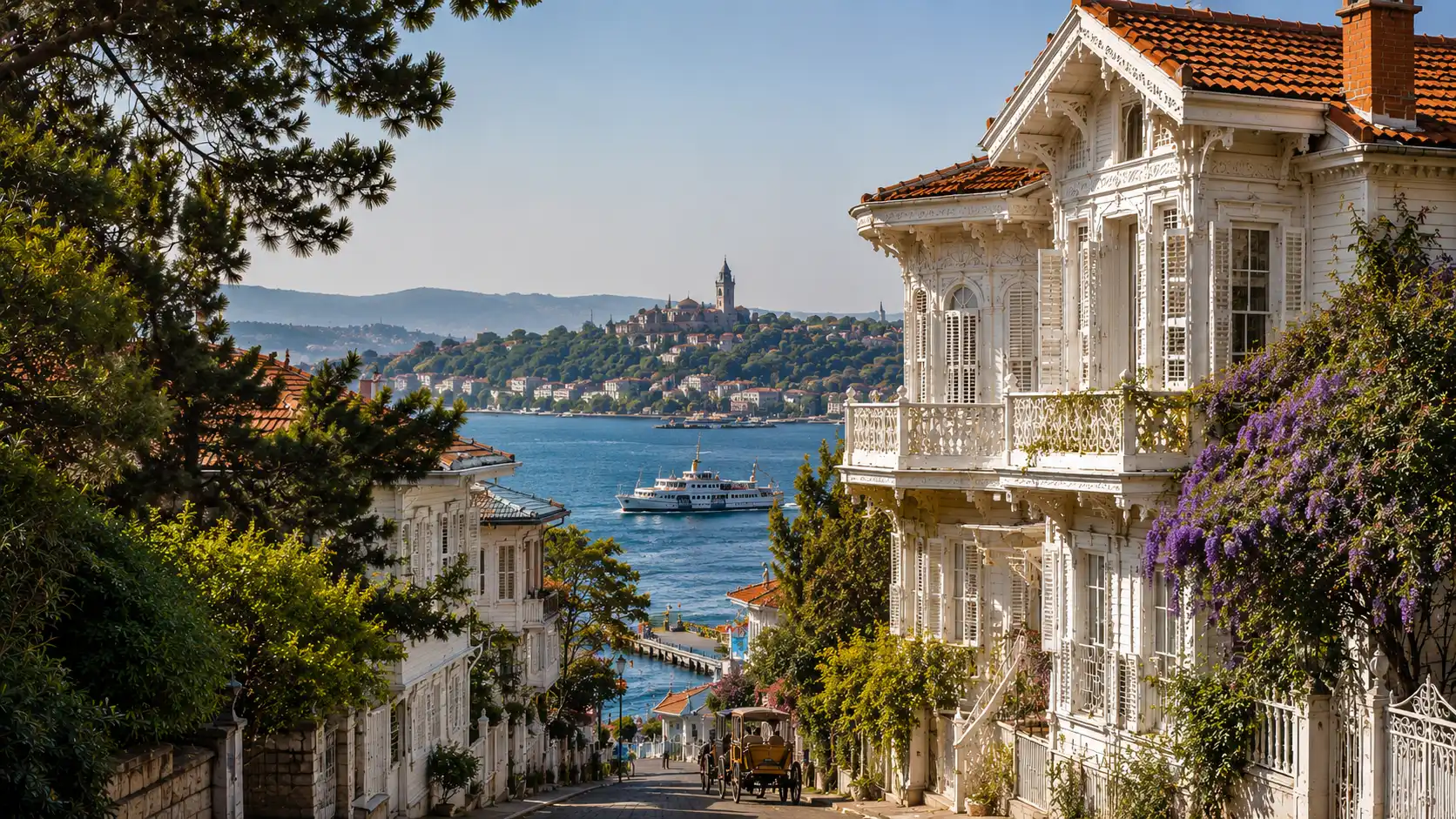
Büyükada is often described as a peaceful escape from Istanbul — a quiet island of pine trees, sea breeze, nostalgic streets, and historic wooden mansions. Yet reducing the island to a tourist destination overlooks its extraordinary architectural and urban significance.
Hidden behind vegetation, coastal roads, and sloping streets lies one of the most unique surviving examples of late Ottoman coastal urbanism in the region.
Unlike the accelerated and dense fabric of modern Istanbul, Büyükada evolved through slowness, climate, seasonal migration, multicultural coexistence, and landscape-sensitive architecture. The island developed not as a commercial urban center, but as a leisure-oriented settlement shaped by sea views, gardens, forests, and topography.
Large timber mansions emerged beside coastal paths rather than crowded bazaars. Streets followed hills and landscape contours instead of rigid grids. Architecture became deeply connected to vegetation, climate, and pedestrian movement.
Today, Büyükada preserves a rare atmosphere where late Ottoman architecture, Mediterranean coastal life, religious heritage, and fragmented urban memory still coexist. Walking through the island reveals not only architectural history, but also a different relationship between city, movement, nature, and time itself.
Just a short ferry ride away from the overwhelming density of Istanbul lies a place that feels detached from the rhythm of the metropolis. Büyükada, the largest of Istanbul’s Princes’ Islands, remains one of the few places near the city where architecture can still be experienced slowly.
Geography and Urban Formation
Büyükada is located in the Marmara Sea southeast of Istanbul and belongs to the archipelago historically known as the Princes’ Islands.
During the Byzantine period, the islands were used as places of exile for princes, nobles, and religious figures. Their isolation from Constantinople made them politically useful while remaining geographically connected to the imperial center.
Centuries later, during the Ottoman era, the islands gradually transformed into seasonal residential zones and summer retreats. The introduction of regular steamship transportation during the nineteenth century accelerated this transformation dramatically.
Once ferry access became reliable, Büyükada became increasingly attractive to wealthy Ottoman, Greek, Armenian, Levantine, and Jewish families seeking distance from the heat, noise, and political intensity of Istanbul.
This accessibility fundamentally shaped the island’s urban identity.
Unlike dense inland Ottoman neighborhoods organized around commercial streets and religious complexes, Büyükada developed as a landscape-oriented residential environment shaped by climate, leisure, sea views, and seasonal life.
Gardens became central architectural elements. Streets followed topography rather than geometry. Villas were positioned to maximize breeze, sunlight, and visual connection with the sea.
The island’s fragmented terrain also created constantly changing spatial experiences. Walking through Büyükada means repeatedly moving between enclosed forest paths, narrow residential streets, hidden gardens, panoramic coastal views, and unexpected architectural encounters.
This fragmented urban condition gives the island much of its cinematic atmosphere today.
The Absence of Cars and the Experience of Space
One of Büyükada’s most distinctive characteristics is the historical absence of conventional automobile traffic.
For decades, the island was associated with horse-drawn phaetons, bicycles, walking, and slow movement. Although electric vehicles have gradually replaced traditional phaetons in recent years, Büyükada still maintains an acoustic and spatial atmosphere radically different from Istanbul.
This absence of heavy traffic fundamentally changes the perception of architecture.
In most modern cities, buildings are experienced through speed. Cars transform architecture into passing visual surfaces rather than inhabitable spatial conditions. On Büyükada, movement remains relatively slow, allowing architecture to be perceived through detail and duration.
As a result, visitors become far more aware of wooden shutters, decorative balconies, bay projections, window proportions, garden walls, aging timber textures, shadows across facades, and transitions between public and private space.
The island therefore preserves not only historic architecture, but also a slower way of experiencing architecture itself.
Late Ottoman Wooden Architecture
The dominant architectural language of Büyükada emerged during the late Ottoman period, particularly between the late nineteenth century and early twentieth century.
This era coincided with modernization reforms, expanding maritime transportation, European cultural influence, and the emergence of a wealthy cosmopolitan class within Istanbul.
Many of the island’s famous houses were commissioned as summer residences by Greek, Armenian, Levantine, and Ottoman elite families. Their architecture reflects a hybrid synthesis of Ottoman residential traditions, European eclecticism, Mediterranean coastal architecture, neo-classical influences, and Art Nouveau ornamentation.
Wood became the primary construction material for many residences.
Although timber architecture was common throughout Ottoman cities, Büyükada developed a particularly refined and expressive wooden residential culture.
Houses frequently incorporated wide windows, decorative wooden facades, verandas, bay projections, ornamental railings, asymmetrical compositions, and large gardens.
Unlike the dense inward-focused courtyard houses of traditional Ottoman neighborhoods, Büyükada’s villas were designed to engage visually with landscape and climate.
Sea views, breezes, sunlight, gardens, and vegetation became central architectural concerns.
The result was an architecture that felt lighter, more open, and more seasonal.
Al Palas (Mizzi Köşkü)
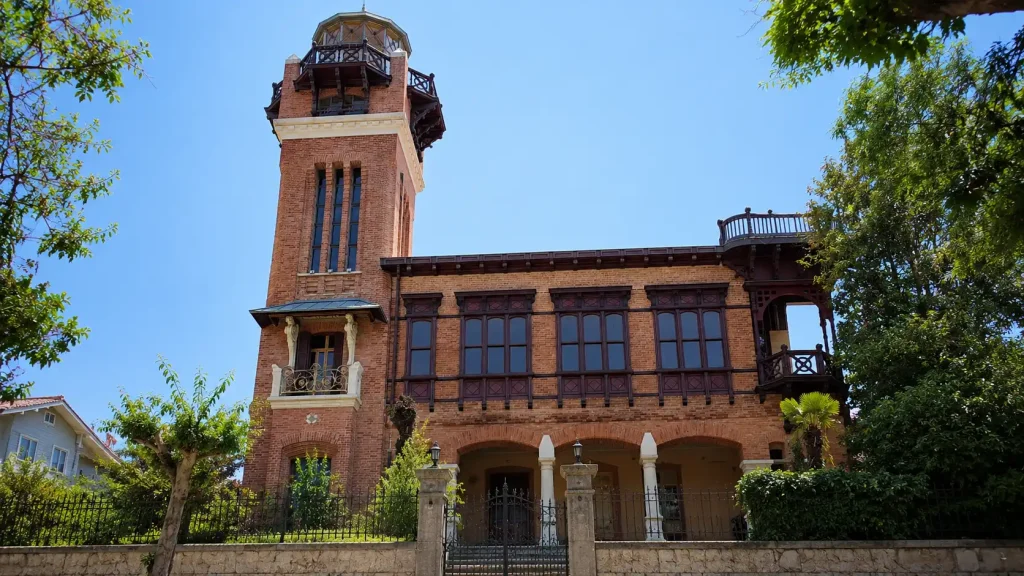
Among the island’s historic mansions, one of the most visually distinctive is Al Palas, also known as Mizzi Köşkü.
Located along the route toward the Nizam neighborhood, the mansion immediately stands out through its elaborate wooden ornamentation, asymmetrical composition, and highly decorative facade.
Surrounded by vegetation and positioned within the island’s sloping residential fabric, Al Palas reflects the cosmopolitan architectural identity that shaped Büyükada during the late Ottoman era.
The mansion was commissioned by the Maltese Mizzi family, one of the Levantine families connected to the multicultural social world of late Ottoman Istanbul.
Architecturally, the building combines Ottoman timber traditions with European decorative sensibilities, producing a hybrid residential language characteristic of the island’s elite summer houses.
Projecting balconies, carved wooden details, layered volumes, and richly articulated facades create a highly theatrical visual presence.
Yet despite its ornamentation, the mansion still remains integrated with the island’s atmosphere through gardens, trees, and topography.
Like many Büyükada mansions, Al Palas was not designed as an isolated monument. It was conceived as part of a larger environmental experience shaped by climate, sea breeze, vegetation, and seasonal life.
Walking past the mansion today reveals one of Büyükada’s defining architectural qualities: buildings often appear gradually through layers of trees and landscape rather than dominating the street directly.
Architecture on the island frequently feels discovered rather than displayed.
The Prinkipo Greek Orthodox Orphanage
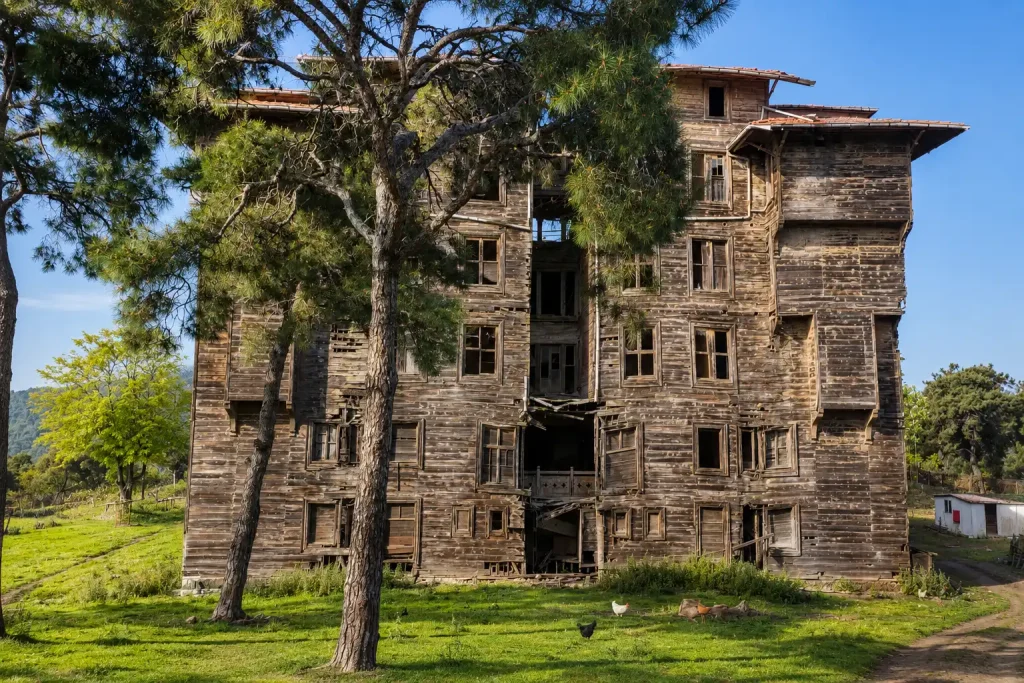
Among all the buildings on Büyükada, none is more architecturally and symbolically significant than the Prinkipo Greek Orthodox Orphanage.
Located on a hill surrounded by forest, the structure dominates the landscape with an almost surreal presence.
Built entirely from wood, the building is considered one of the largest wooden structures in Europe and among the largest wooden buildings in the world.
Originally designed in the late nineteenth century by the French-Ottoman architect Alexandre Vallaury, the building was initially intended to function as a luxury hotel and casino.
However, political and religious opposition reportedly prevented the casino project from operating.
The building was later acquired by the Greek Orthodox Patriarchate and transformed into an orphanage for Greek Orthodox children.
For decades, the orphanage housed thousands of children and became deeply connected to the island’s Greek Orthodox history.
Architecturally, the building represents a remarkable combination of scale, craftsmanship, and timber engineering.
Its massive wooden facades, repetitive window systems, layered volumes, and hilltop placement create a powerful visual presence unlike anything else on the island.
At the same time, the building also embodies themes of abandonment and memory.
After years of deterioration and political disputes, the structure now stands partially ruined yet deeply atmospheric.
Its decaying wooden surfaces and empty windows create an emotional architectural condition somewhere between monument and ruin.
For many visitors, the orphanage represents the emotional center of Büyükada.
Architecture and Climate
Climate played a central role in shaping Büyükada’s architectural language.
The Marmara Sea produces humid summers and strong seasonal breezes. Large windows, balconies, verandas, and semi-open spaces allowed natural ventilation while creating lighter visual compositions appropriate for a coastal leisure environment.
The island’s architecture therefore developed as climatic architecture as much as social architecture.
Shaded terraces softened transitions between interior and exterior space. Vegetation merged with buildings. Many houses appear partially hidden within gardens and pine trees, creating gradual relationships between architecture and landscape.
This integration with nature remains one of Büyükada’s defining characteristics today.
Conclusion
Büyükada ultimately represents far more than a nostalgic island near Istanbul.
It is a living architectural landscape shaped by memory, climate, geography, multicultural history, and slow urban movement.
Its wooden mansions, coastal streets, monasteries, gardens, forested paths, and layered residential fabric preserve a version of urban life that has largely disappeared from contemporary metropolitan environments.
The island demonstrates how atmosphere itself can become a form of heritage.
In Büyükada, architecture is rarely experienced through monumentality alone. Instead, it emerges through walking, silence, vegetation, sea breeze, changing light, and gradual spatial discovery.
Perhaps this is why Büyükada leaves such a strong impression on visitors.
Not because it exists outside modernity, but because it still allows architecture to be experienced slowly — something increasingly rare in contemporary urban life.
