Exploring Architectural Creativity in Poetics of Architecture, Anthony C Antoniades
Introduction
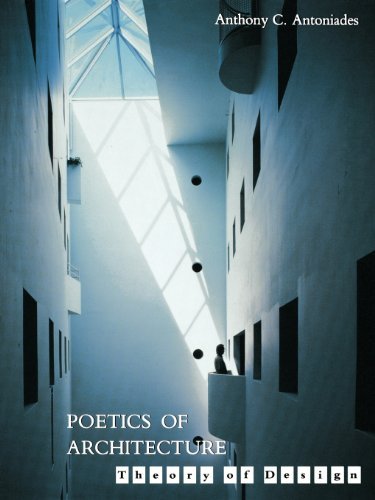
Architecture has long been recognized as artistic expression, merging creativity, structure, and function. Beyond the mere act of constructing buildings, architecture embodies a deeper poetic sensibility that infuses spaces with meaning, emotion, and cultural significance. This concept, explored in depth by Anthony C Antoniades in Poetics of Architecture, suggests that architecture should not merely adhere to stylistic trends but instead engage with the fundamental human need for beauty, harmony, and innovation.

Understanding Architectural Poetics
The term “poetics” originates from the Greek word Poietikos, meaning “to create.” Historically, figures like Aristotle and Plato discussed poetics in the context of literature and philosophy, but its application extends seamlessly into architecture. Antoniades argues that poetics in architecture is not merely about aesthetics but about infusing buildings with a spirit that resonates with human experience.
There are different approaches to architectural poetics:
- Unconsidered Poetics: Rooted in tradition, it follows the established norms and practices of predecessors.
- Dynamic Poetics: Based on intellectual engagement, enabling architects to critique, refine, and innovate.
- Holistic Poetics: A comprehensive approach that considers cultural, functional, and aesthetic dimensions, resulting in architecture that responds to diverse human needs.
Creativity as a Process in Architecture
Creativity in architecture is not an isolated act but a continuous process that intertwines imagination and perception. According to Poetics of Architecture, imagination refers to the ability to conceive spaces that do not yet exist, while perception bridges the gap between conceptual ideas and tangible reality. Without imagination, architecture remains stagnant; without perception, imaginative ideas fail to materialize into functional designs.
The process of creativity involves:
- Visualization and Conceptualization: Architects must first envision spaces, shaping their ideas based on cultural, historical, and spatial contexts.
- Metaphorical Thinking: Many renowned architects employ metaphors to create unique architectural identities. Antoniades discusses how metaphors—whether tangible (e.g., a house resembling a fortress) or intangible (e.g., a structure representing human resilience)—serve as tools for innovation.
- Experimentation and Refinement: The act of designing is iterative. Successful architects refine their work through feedback, material exploration, and reimagining conventional forms.
Poetry, Literature, and Architectural Inspiration
Literature and poetry have historically influenced architectural thought, offering new ways to perceive space, rhythm, and composition. Antoniades highlights the connection between poetry and architecture, suggesting that poetic structures, like haikus or epic narratives, can inspire architectural form and meaning.
For instance, Japanese haiku poetry, known for its brevity and depth, mirrors minimalist architecture by emphasizing simplicity, balance, and spatial fluidity. Similarly, epic literature—such as Homer’s Odyssey—provides insights into cultural identity, informing the way architects approach storytelling through design.
Architects such as Le Corbusier, Frank Lloyd Wright, and Tadao Ando have frequently drawn inspiration from literature. Their designs often evoke a narrative quality, as if each building tells a story about its purpose, environment, and cultural influences. The interplay between written language and architectural space suggests that architects, much like poets, engage in the art of composition, carefully structuring form, light, and movement to evoke emotion.
The Role of Symbolism and Metaphor in Design
Symbolism has been an essential part of architecture since antiquity. From the pyramids of Egypt, which symbolize spiritual ascent, to the Gothic cathedrals of Europe, representing divine transcendence, architecture has always sought to communicate beyond the tangible.
Anthony Antoniades emphasizes that successful architecture should incorporate both tangible and intangible metaphors. The tangible aspect relates to physical forms inspired by nature, history, or cultural motifs, while the intangible aspect involves deeper conceptual references, such as the idea of a building embodying resilience, memory, or transformation.
A prime example is Frank Gehry’s Guggenheim Museum in Bilbao, which evokes the image of a ship in reference to the city’s maritime heritage. Similarly, Santiago Calatrava’s bridges often resemble skeletal structures, reinforcing ideas of organic growth and connectivity. These metaphorical interpretations enrich architecture, making it more than mere function—it becomes a medium for storytelling and cultural expression.
Metaphysics, Paradox, and Architectural Innovation
Beyond direct artistic influences, architecture thrives on paradox and metaphysical inquiry. Architects often grapple with the tension between the built and the unbuilt, permanence and impermanence, function, and abstraction. Antoniades discusses how engaging with paradoxical ideas—such as designing spaces that appear weightless yet structurally sound—can lead to groundbreaking innovations.
Metaphysical considerations in architecture include:
- Timelessness: How can a building transcend its era and remain relevant for generations?
- Spatial Perception: How do different cultures perceive and interact with space?
- Symbolism: How can form and materiality convey deeper meanings?
This inquiry extends to modern-day architects like Peter Eisenman and Daniel Libeskind, who challenge conventional notions of space by using fragmentation, asymmetry, and layering to evoke memory and emotion. The Jewish Museum in Berlin, designed by Libeskind, is a striking example where voids and disjointed pathways serve as a metaphor for loss and displacement, emphasizing architecture’s ability to communicate history and identity.
The Balance Between Function and Aesthetics
While creativity is essential, architecture must balance aesthetic ambition with functionality. Antoniades argues that some architects become overly focused on stylistic expression at the expense of usability, leading to structures that may look impressive but fail to serve their occupants effectively.
A truly poetic approach to architecture integrates:
- Human-Centered Design: Spaces that accommodate human needs, comfort, and social interaction.
- Sustainability: Environmentally responsible design that harmonizes with nature rather than imposing upon it.
- Technological Adaptation: Using modern materials and digital advancements to enhance design possibilities while maintaining structural integrity.
Great architectural works, such as those by Alvar Aalto and Louis Kahn, embody this balance. Their buildings are not only visually compelling but also functionally effective, responding to the natural environment and the human experience in meaningful ways.
The Everlasting Dialogue Between Space and Creativity
Exploring Intangible Dimensions of Architectural Innovation
The poetics of creativity in architecture extend far beyond the physical act of building. It involves synthesizing imagination, perception, literature, philosophy, and cultural understanding. As Antoniades articulates in Poetics of Architecture, architects must not be confined by rigid stylistic debates but should instead seek a holistic approach that harmonizes beauty, functionality, and meaning. By embracing poetic principles, architects can create spaces that inspire, resonate, and endure.
Architecture, at its best, is a dialogue between space and the human spirit. It is an art form that, when approached with poetic sensibility, transcends time and place to shape the way people live, interact, and experience the world. The challenge for architects today is to merge poetic vision with practical execution, ensuring that architecture continues to be both an artistic and humanistic pursuit, one that enriches lives and communities across generations.
By drawing on inspiration from literature, philosophy, and metaphysical exploration, architects can forge new creative frontiers—ones that not only push boundaries but also bring a sense of wonder and meaning to everyday life.