
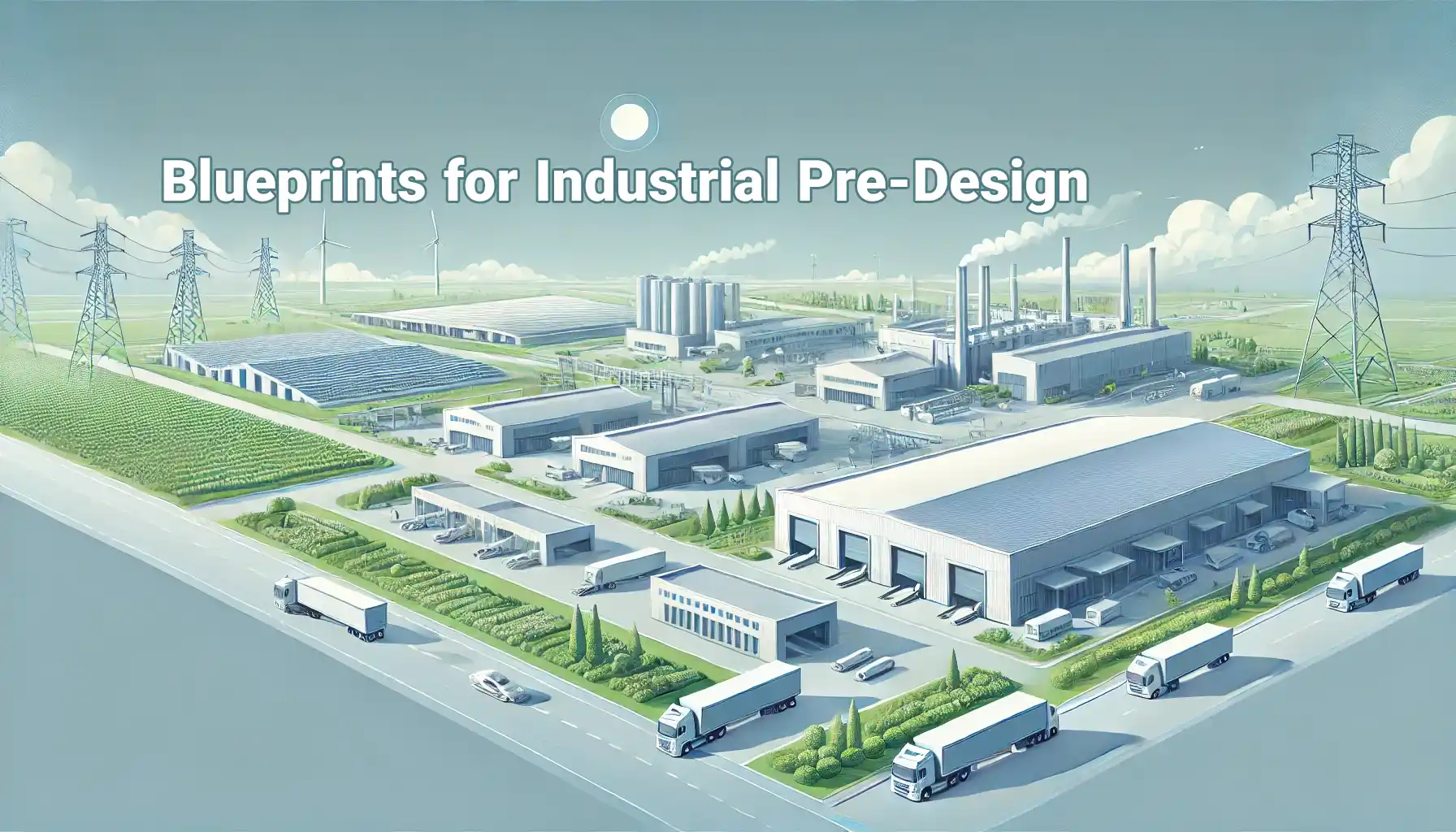
Discover the essential factors for planning industrial complexes, from site selection and sustainability to operational efficiency and future expansion.
Introduction: Setting the Stage for Industrial Excellence
Designing industrial complexes is a critical process that requires precision, foresight, and alignment with operational goals. These facilities are the backbone of modern economies, enabling manufacturing, logistics, and research functions. This guide explores pre-design considerations that form the foundation of efficient, sustainable, and future-ready industrial complexes.
Understanding the Core Objectives
Before initiating the design process, it’s vital to outline the purpose of the industrial complex:
- Is it for manufacturing, storage, logistics, or research?
- What are the short-term and long-term operational goals?
- How can the design enhance scalability, efficiency, and sustainability?
Key Pre-Design Considerations
1. Site Selection and Analysis
The location of an industrial complex directly impacts its functionality and logistics. Look for:
- Accessibility: Proximity to transportation hubs, raw materials, and labor pools.
- Environmental Fit: Soil conditions, topography, and climate suitability.
- Regulatory Compliance: Zoning laws and permits that align with the intended use.
2. Optimizing Workflow and Layout
Efficiency in space planning is paramount:
- Zoning areas for production, storage, administration, and employee amenities.
- Ensuring seamless workflow between zones to minimize material handling time.
- Flexibility for future expansions or technological upgrades.
3. Sustainability Goals and Certifications
Today’s industrial complexes prioritize green practices:
- Implement renewable energy solutions like solar panels.
- Use advanced water management systems for recycling and conservation.
- Aim for certifications like LEED or ISO to reinforce credibility.
4. Safety and Compliance
Worker safety and operational security must be ingrained in the design:
- Adhere to local and international safety regulations.
- Incorporate robust fire suppression systems and ergonomic workspace designs.
- Secure storage areas for hazardous materials.
5. Integration of Smart Technologies
The industrial sector is rapidly embracing automation and IoT:
- Utilize smart monitoring for real-time data on energy use and equipment performance.
- Design IT infrastructure to support automation and cybersecurity needs.
Planning for Future Growth
The pre-design phase must anticipate future needs, allowing for:
- Scalable layouts that can adapt to increased production demands.
- Provisions for advanced technologies as they become available.
- Space for vertical or horizontal expansion without disrupting operations.
The Role of Pre-Design Questionnaires
A detailed questionnaire ensures no critical detail is overlooked, capturing insights into site requirements, operational workflows, and stakeholder priorities. This tool is essential for tailoring designs to meet the specific needs of an industrial complex.
Building for Today and Tomorrow
Comprehensive pre-design planning is the cornerstone of successful industrial complexes. By considering site-specific factors, optimizing layouts, and integrating sustainable practices, stakeholders can create facilities that meet today’s needs while remaining adaptable to future challenges. Use this guide as a roadmap to ensure your industrial complex is efficient, sustainable, and built to thrive.
The pre-design questionnaire is an indispensable tool that bridges the gap between conceptual understanding and practical execution in the development of industrial complexes. While the article outlines the theoretical framework and key considerations, the questionnaire serves as a hands-on instrument to capture specific project details, operational requirements, and stakeholder priorities. Together, they ensure that every aspect—from site analysis to sustainability goals and future expansion plans—is thoroughly addressed, paving the way for a customized design that aligns with both current needs and long-term objectives. By leveraging the insights gained from this questionnaire, designers and stakeholders can collaborate effectively, reducing risks, optimizing workflows, and achieving a harmonious integration of form, function, and sustainability.

Pre-Design Questionnaire for Industrial Complexes
We hope this detailed questionnaire provides a comprehensive framework to ensure your industrial complex meets its full potential. For any questions or further assistance, feel free to reach out to our design team. Thank you for collaborating with us!
Designing an industrial complex is a multifaceted process that requires detailed planning, clear communication, and informed decision-making. The article provides a theoretical framework to guide stakeholders through critical considerations like site selection, sustainability, safety, and operational efficiency. The accompanying questionnaire serves as a practical tool to capture the specific needs and priorities of each project, ensuring a tailored and well-thought-out design.
By combining these resources, stakeholders can establish a solid foundation for their industrial complex, balancing functionality, scalability, and sustainability. This integrated approach not only minimizes risks and future adjustments but also creates facilities that are efficient, adaptable, and aligned with both current operations and future growth objectives. Whether you are at the early stages of planning or refining the details, these tools provide a comprehensive guide to navigating the complexities of industrial design with confidence.
